The cheapest motor on the quote sheet is now the most expensive procurement mistake in commercial equipment. Global commercial equipment energy-efficiency upgrades have crossed a hard line: **high-efficiency motors** are no longer a sustainability talking point. They are the procurement requirement separating exporters from chargebacks.
Electric motors consume roughly **45% of global electricity**, and regulators in the US, EU, and China are tightening minimum efficiency standards faster than most OEMs update their bills of materials. For procurement teams sourcing commercial HVAC, refrigeration, pumps, and compressors, the shift toward **high-efficiency motors** is urgent. A motor that meets today’s spec can fail tomorrow’s customs check.
This guide breaks down the regulations, the hidden costs, and the supplier audit steps that turn **high-efficiency motors** from a cost line into a market-access asset.
## Why Global Commercial Equipment Energy-Efficiency Upgrades Are Accelerating
Three forces are compressing the upgrade cycle.
### Regulation Is Moving Faster Than Legacy Supply Chains
The EU’s ecodesign rules now require **IE3 or IE4** efficiency levels for many commercial motors. The US Department of Energy continues to raise efficiency thresholds under **10 CFR 431**. China’s **GB 18613-2020** standard has made IE3 the minimum for most motors in the Chinese market.
These standards are not static. Compliance windows are shrinking, and procurement teams that treat **high-efficiency motors** as a premium option are already late.
### Energy Prices Make Efficiency a TCO Decision, Not a Purchase Decision
A motor’s purchase price is often less than **5% of its lifetime cost**. Energy, maintenance, and downtime dominate the total cost of ownership. **High-efficiency motors** reduce energy losses by **20% to 30%** compared with older IE1/IE2 designs.
That gap widens every time electricity prices spike. Industrial buyers now evaluate **high-efficiency motors** on **total cost of ownership**, not unit price.
### Retail and Facility Buyers Are Driving the Spec from the Demand Side
Large retailers and facility operators use energy intensity metrics in vendor scorecards. A commercial HVAC or refrigeration unit with a low-efficiency motor can lose the deal before the quote is discussed.
**High-efficiency motors** are becoming a visible, verifiable signal of equipment quality.
## The Cost of Ignoring High-Efficiency Motor Mandates
The real risk is not the motor price. It is the cost of a container held at customs or a customer chargeback after delivery.
Industry audits show non-compliant motor inventory often triggers rework costs of **$85,000 to $2.1 million** per product line. Those costs come from re-testing, re-labeling, expedited replacement motors, and lost purchase orders.
### The 4 Hidden Costs of Low-Efficiency Motors
– **Re-certification and re-testing fees** when a destination market rejects a motor.
– **Customs holds and importer penalties** that delay entire equipment shipments.
– **Retrofit and warranty claims** when motors fail efficiency verification in the field.
– **Brand erosion** with retail and OEM buyers who audit supplier compliance.
Each of these costs is avoidable with a proactive **high-efficiency motors** procurement strategy.
## How High-Efficiency Motors Turn Compliance Into a Procurement Advantage
**High-efficiency motors** are not just a defensive purchase. They create margin and speed-to-market advantages for OEMs and importers.
### IE3 vs IE4: What Procurement Teams Must Specify
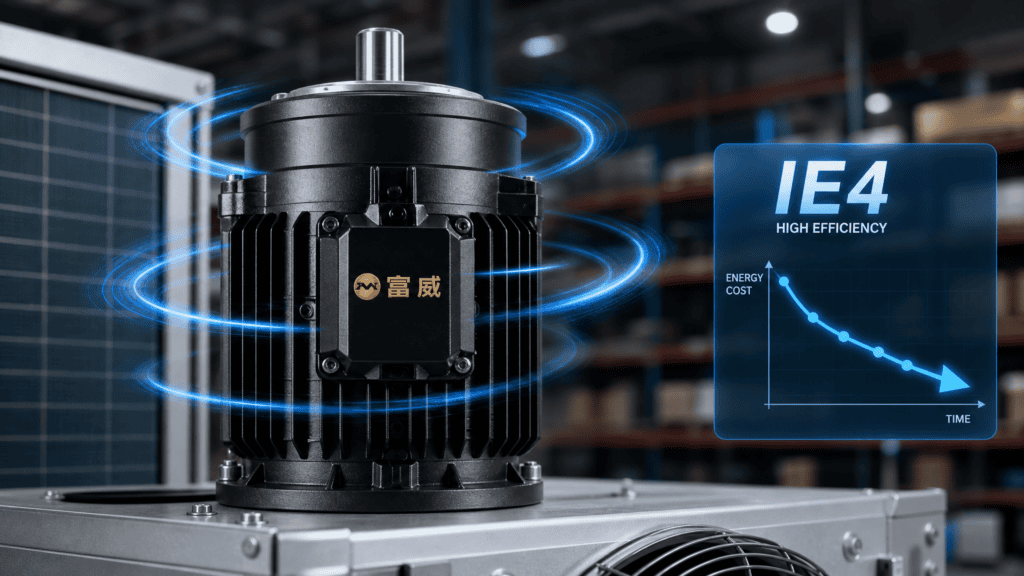
**IE3 motors** are the baseline for most regulated markets. **IE4 motors** go further, cutting losses through improved rotor design, thinner laminations, and lower-resistance windings.
The right **high-efficiency motors** spec depends on the destination market and the application. Pumps, fans, and compressors with long runtimes often justify IE4 on energy savings alone.
### Total Cost of Ownership: The Number That Changes the Quote
Use this formula when comparing motor quotes:
**TCO = purchase price + energy cost + maintenance cost + downtime cost**
An IE4 **high-efficiency motor** may cost **15% to 20% more upfront**. It can still deliver a payback in **9 to 18 months** in continuous-duty commercial equipment.
Procurement teams that present this calculation to finance gain faster approval. Finance teams respond to payback, not sustainability slogans.
### Faster Market Access for Exporters
Suppliers with certified **high-efficiency motors** can ship the same platform into the US, EU, and China with fewer re-engineering delays. That speed is a competitive weapon.
A single motor platform that meets IE3/IE4, NEMA Premium, and GB 18613-2020 reduces SKU complexity and inventory risk.
## 7 Supplier Red Flags That Add $2.1M in Compliance Risk
Use these red flags to audit your current motor supplier before the next purchase order.
### 1. The Supplier Cannot Produce IE3 or IE4 Test Reports
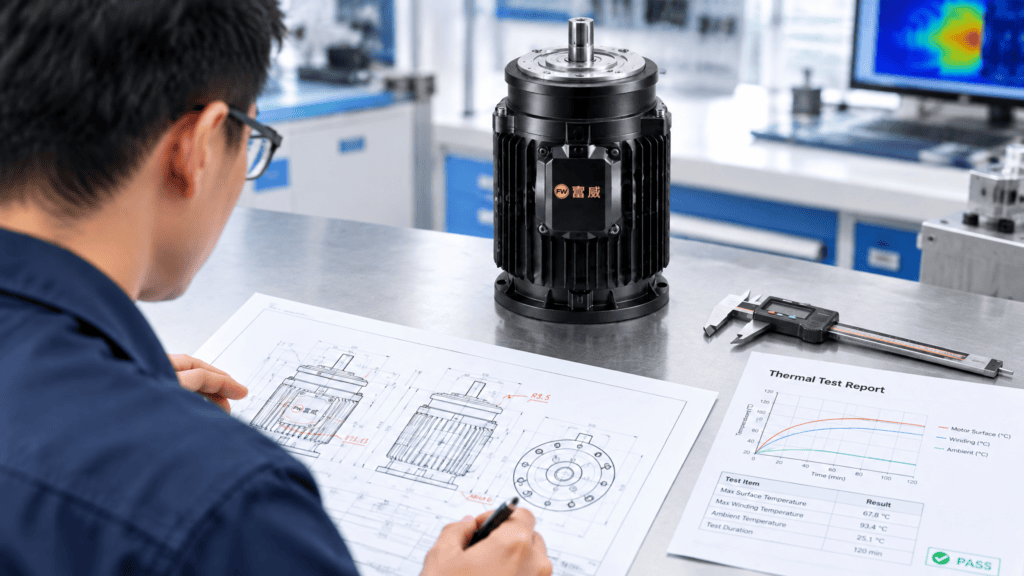
A reliable manufacturer tests motors and documents the measured efficiency. If the supplier only shares a catalog number, you are buying risk.
### 2. The Nameplate Shows “Design Value” Instead of “Tested Value”
Design values can overstate efficiency by several percentage points. Tested values are what regulators and customs inspectors verify.
### 3. The Supplier Quotes One Efficiency Class for Every Market
A motor that is legal in one country may be illegal in another. The supplier should map each motor to specific market requirements.
### 4. There Is No Third-Party Certification
Look for **UL, CE, CCC, or GB** certification evidence. Third-party marks reduce the chance of a costly customs hold.
### 5. Lead Times for High-Efficiency Motors Are Vague
If a supplier cannot commit to production and delivery dates for **high-efficiency motors**, your launch schedule is at risk.
### 6. The Supplier Cannot Map Motors to Specific Regulations
Ask for a compliance matrix covering **EU 2019/1781, US 10 CFR 431, and China GB 18613-2020**. A capable supplier answers this in hours, not weeks.
### 7. No Warranty Coverage for Energy Performance Claims
The warranty should cover efficiency performance, not just mechanical failure. If efficiency is excluded, the supplier is not confident in the product.
## A Practical High-Efficiency Motor Procurement Checklist
### Before You Sign the PO
– Confirm the required efficiency class for each destination market.
– Request certified test reports and full nameplate data.
– Calculate **total cost of ownership**, not unit price.
– Validate lead times and qualify a second source for **high-efficiency motors**.
– Lock in compliance warranty and chargeback terms in the contract.
### Questions to Ask Your Motor Supplier Today
– “Can you provide IE3 and IE4 test reports for this exact motor model?”
– “Which markets is this motor certified for?”
– “What is the tested efficiency at full load and partial load?”
– “What warranty do you offer if the motor fails an efficiency audit?”
These questions separate commodity brokers from manufacturers that understand global commercial equipment energy-efficiency upgrades.
## Conclusion: The New Procurement Bottom Line
**High-efficiency motors** are no longer an engineering preference. They are a procurement requirement tied to market access, cash flow, and brand trust.
Three key takeaways:
1. **Energy-efficiency upgrades are regulatory gateways.** A non-compliant motor can stop an entire shipment at customs.
2. **High-efficiency motors lower total cost of ownership.** The upfront premium is small compared with energy, maintenance, and downtime savings.
3. **Supplier audits must focus on test data and market-specific compliance.** Certified IE3/IE4 reports matter more than a low quote.
Use this checklist to audit your current motor supplier before your next purchase order. If your supplier cannot produce certified **IE3/IE4** test reports, start the qualification process now—because your competitors already have.
—
## 📚 Related Resources
– High-Efficiency Motor Supplier Audit Checklist: /motor-supplier-audit-checklist
– IE3 vs IE4 Motor TCO Calculator: /ie3-vs-ie4-motor-tco-calculator
– Commercial HVAC Motor Compliance Guide: /commercial-hvac-motor-compliance-guide
– China GB 18613-2020 Motor Export Guide: /china-gb-18613-motor-export-guide
—
## ❓ Frequently Asked Questions
**Q: What is the difference between IE3 and IE4 high-efficiency motors?**
**A:** IE3 is the regulated baseline in many markets, while IE4 reduces energy losses further through advanced rotor and winding designs. IE4 typically costs 15% to 20% more upfront but pays back faster in continuous-duty equipment.
**Q: Which regulations affect commercial equipment motors in 2025?**
**A:** Key rules include the EU ecodesign regulation 2019/1781, US 10 CFR 431, and China GB 18613-2020. Each market sets minimum efficiency levels and testing requirements for high-efficiency motors.
**Q: How much can high-efficiency motors save in total cost of ownership?**
**A:** High-efficiency motors can cut energy losses by 20% to 30% compared with older IE1/IE2 designs. In continuous-duty applications, the payback period is often 9 to 18 months.
**Q: Do high-efficiency motors require longer procurement lead times?**
**A:** Certified IE3/IE4 motors can have longer lead times if a supplier does not keep them in stock. Reliable manufacturers typically maintain safety stock and provide firm production dates to avoid launch delays.
**Q: Can I use one high-efficiency motor for US, EU, and China markets?**
**A:** In many cases, yes. A motor platform that meets IE3/IE4, NEMA Premium, and GB 18613-2020 can serve multiple markets, but you must verify certification marks and nameplate data for each destination.