Introduction
Submersible pumps are widely used in agricultural irrigation, aquaculture water management, industrial drainage, sewage treatment and municipal water supply systems. The performance and service life of a submersible pump depend not only on the pump body and impeller design, but also on whether the motor is properly matched to the actual working conditions.
A mismatched submersible pump motor may cause a series of operational problems:
1.Insufficient power leads to low flow, insufficient lift, and poor pumping efficiency.
2.Inadequate waterproof structure causes water ingress, winding short circuit and motor burnout.
3.Poor cooling performance leads to continuous temperature rise under long-time operation.
4.Low insulation class cannot withstand frequent startup, heavy load and underwater heat accumulation.
5.Unsuitable material selection causes corrosion, rust, impeller jamming and shortened service life.
6.Lack of overload protection increases the risk of burnout when the pump is blocked, overloaded or runs dry.
That is why professional motor selection is critical for submersible pump systems.
Core Selection Criteria for Submersible Pump Motors
- Power Calculation and Load Margin
Motor power should be selected according to the required flow rate, total head, pipeline loss and pumping medium. It is recommended to reserve a minimum 10% to 20% power safety margin to cope with peak load, voltage fluctuation, sediment impact and long-term continuous operation.
Selection Reference:
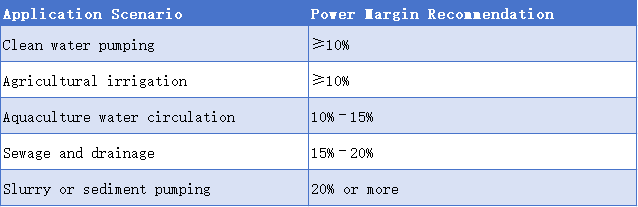
Too small power will cause long-term overload, while excessive power will increase unnecessary energy consumption.
- IP Protection Grade
Submersible pump motors that operate fully underwater must be equipped with IP68 protection class. This is the basic requirement for long-term submersion.
Explanation:
·IP68: Dust-tight and suitable for continuous submersion in water. It prevents water, sediment and moisture from entering the motor internal cavity.
·IP54 / IP55: Only suitable for splash-proof or surface-mounted equipment. They cannot be used for long-term fully submerged operation.
Many failures occur because buyers incorrectly choose IP55 motors for underwater installation. Although IP55 can resist splashing water, it cannot withstand long-term immersion or water pressure.
- Insulation Class
Submersible pumps often run continuously in enclosed underwater environments. Heat generated by the motor is not easily dissipated into the surrounding air, so insulation performance directly affects service life.
It is recommended to use Class F insulation as the minimum standard, with a maximum temperature resistance of 155°C.
Why Class F insulation:
·Better high-temperature resistance.
·More stable under continuous load.
·Stronger ability to withstand heat accumulation inside the motor.
·Longer service life compared with Class B or Class E insulation.
- Cooling System: Oil-Filled Submersible Motor
The cooling system is one of the most critical factors for submersible pump reliability.
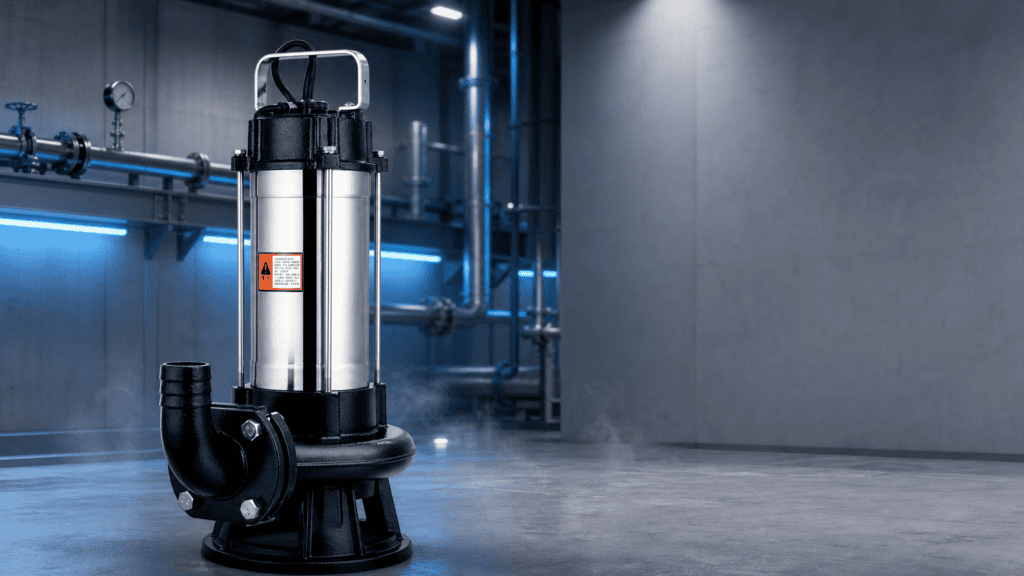
Fuwei submersible pumps are powered by oil-filled submersible motors, which are specially designed for fully submerged operation.
In this design, the motor cavity is filled with mechanical oil, which helps to transfer heat evenly inside the motor, improves continuous operation stability, and provides better protection for windings and bearings.
Advantages of oil-filled submersible motors:
·Good heat dissipation performance under continuous operation.
·More stable temperature rise.
·Suitable for long-time submerged working conditions.
·Better protection for windings and lubrication for bearings.
·Reduced risk of burnout caused by overheating.
This structure is especially suitable for agricultural irrigation, aquaculture water management, industrial drainage, sewage lifting and municipal water supply.
- Housing, Shaft and Fastener Material
Submersible pump motors are exposed to water, sediment and possibly corrosive media. Material selection directly affects corrosion resistance and service life.
Recommended material standards:
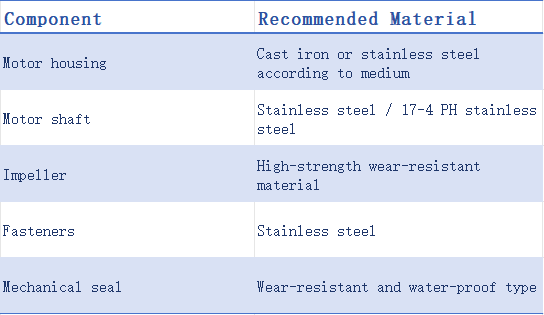
Selection tips:
·Clean water conditions can use cast iron housing with stainless steel shaft.
·Sewage and corrosive conditions should consider stainless steel housing or anti-corrosion coating.
·Do not mix carbon steel and stainless steel parts, which may cause galvanic corrosion in water.
- Overload and Overheat Protection
A reliable submersible pump motor should be equipped with complete protection mechanisms.
Basic protection configuration:
6.1 Built-in PTC thermistor
Monitors winding temperature and cuts off power automatically when overheating occurs.
6.2 External circuit breaker
Set the tripping current to approximately 1.1 times the motor rated current, avoiding false tripping while protecting against overcurrent.
6.3 Dry-run protection
Recommended for sewage pumps and pumps with unstable water supply to prevent motor burnout when the pump runs without water.
6.4 Blockage protection
Especially important for sewage pumps, slurry pumps and pumps handling sediment-laden water.
Application Scenario Selection Guide
- Clean Water Submersible Pumps
Clean water pumps are mainly used for pumping clean water from wells, rivers, reservoirs and pools. Typical applications include agricultural irrigation, domestic water supply and aquaculture water exchange.
Key selection points:
·Power margin: ≥10%
·Protection grade: IP68
·Insulation class: Class F
·Cooling structure: Oil-filled submersible motor or water-cooled motor
·Material: Cast iron housing with stainless steel shaft
·Focus: Stable flow, low noise and long continuous operation
- Sewage Submersible Pumps
Sewage submersible pumps are used to transport wastewater, sewage, sludge and water containing solid particles. Compared with clean water pumps, sewage pumps require stronger anti-clogging, wear-resistant and overload-resistant designs.
Key selection points:
·Power margin: 15%–20%
·Protection grade: IP68
·Insulation class: Class F
·Cooling structure: Oil-filled submersible motor or enhanced water-cooled structure
·Material: Cast iron or stainless steel housing, reinforced stainless steel shaft
·Focus: Anti-clogging, corrosion resistance, wear resistance and overload capacity
- Agricultural Irrigation Pumps
Agricultural irrigation pumps usually operate seasonally and may face unstable power supply, long-distance water delivery and variable water levels.
Key selection points:
·Power margin: ≥10%
·Protection grade: IP68
·Insulation class: Class F
·Cooling structure: Oil-filled submersible motor is suitable for continuous or intermittent operation.
·Material: Cast iron housing with stainless steel shaft, cost-effective and reliable.
·Focus: Energy efficiency, easy maintenance and adaptability to voltage fluctuation.
- Aquaculture Submersible Pumps
Aquaculture submersible pumps are used for water circulation, oxygenation support, water exchange and pond drainage. They require stable operation, low vibration and low noise.
Key selection points:
·Power margin: 10%–15%
·Protection grade: IP68
·Insulation class: Class F
·Cooling structure: Oil-filled submersible motor or water-cooled motor
·Material: Cast iron housing with stainless steel shaft
·Focus: Continuous operation stability, low noise and low vibration
Technical Whitepaper: Common Selection Mistakes
- Mistake: IP55 motors can be used underwater
IP55 only provides splash-proof protection. It cannot withstand long-term submersion or water pressure. Only IP68 is suitable for fully submersible operation. - Mistake: All submersible pumps can use the same motor
Clean water pumps, sewage pumps and slurry pumps have different load characteristics. Sewage pumps need higher power margin, better anti-clogging performance and stronger material resistance. - Mistake: Power can be selected exactly without margin
Actual operating conditions often involve voltage fluctuation, pipeline loss, sediment and peak load. A motor selected exactly at rated power may easily overheat. - Mistake: Ignoring insulation class to reduce cost
Submersible motors work in enclosed underwater environments. Low insulation class may cause rapid insulation aging and shorten service life. - Mistake: Using air-cooled motors for submersible pumps
Air-cooled motors rely on fans and air flow to dissipate heat. Once submerged, they cannot cool properly and may overheat quickly.
FAQ
- Q1: What is the difference between IP68 and IP55 submersible motors?
- A: IP68 supports long-term full submersion. IP55 only resists splashing water and cannot be used for continuous underwater operation.
- Q2: Are oil-filled submersible motors suitable for continuous operation?
- A: Yes. Oil-filled submersible motors are designed for fully submerged operation. The internal mechanical oil helps heat transfer and provides better lubrication and protection for windings and bearings.
- Q3: Can a clean water submersible pump be used for sewage?
- A: Generally not recommended. Sewage contains solid particles and corrosive components, requiring higher power margin, anti-clogging structure and more resistant materials.
- Q4: What protection should a submersible pump motor have?
- A: It is recommended to have IP68 protection, Class F insulation, PTC thermal protection, overload circuit breaker, and optional dry-run protection.
- Q5: How long can a submersible pump motor last?
- A: Service life depends on motor quality, cooling performance, material protection, operating conditions and maintenance. A properly selected and well-maintained submersible pump motor can achieve long-term stable operation.
Final CTA
Selecting the right submersible pump motor is essential for reducing downtime, lowering maintenance cost and improving pumping efficiency. Whether for clean water supply, sewage lifting, agricultural irrigation or aquaculture water management, the motor should be matched according to actual flow, head, medium and operating conditions.
Fuwei submersible pumps powered by oil-filled submersible motors are designed for fully submerged operation, delivering reliable performance for agricultural irrigation, aquaculture water management, industrial drainage and municipal water supply.
👉 Download the complete submersible pump motor selection checklist
👉 Contact our technical team for motor parameter recommendation, quotation and customization support