Custom industrial motor orders in North American logistics automation grew **28%** in 2024, while off-the-shelf motor returns hit **12%** in mixed commercial pump and fan applications. That mismatch is quietly costing distributors an estimated **$60,000 per project** in rework, chargebacks, and unplanned downtime. If you still stock standard motors for engineered environments, you are feeding a service burden instead of capturing margin. This guide breaks down the five commercial sectors driving custom industrial motor demand, the specifications that matter, and the supplier traps that erase profit.
## Why Custom Industrial Motor Demand Is Outpacing Standard Stock
Commercial buyers are not ordering custom industrial motors for vanity. They are doing it because standard frames fail faster, consume more energy, and create longer changeover delays. Industry audits show that application-specific motors reduce unplanned downtime by **18% to 31%** in conveyor, pump, and automation fleets. Energy efficiency regulations are also pushing commercial pump and fan operators toward engineered-to-order motor programs.
Three shifts are accelerating demand.
– **Energy compliance:** IE4 and IE5 efficiency rules make standard motors obsolete in many commercial pump and fan installations.
– **Space constraints:** Logistics and automation equipment now uses compact, low-profile motor packages that standard catalogs do not cover.
– **Service consolidation:** Buyers want one custom motor supplier that can support multi-scenario applications instead of three fragmented vendors.
Reliable manufacturers typically respond with modular stator, winding, and sealing options rather than forcing buyers into expensive full-custom designs. To avoid costly chargebacks, distributors should verify that every custom motor still uses proven lamination stacks and standardized mounting dimensions where possible.
## 1. Logistics and Material Handling: Conveyor-Ready Custom Industrial Motors
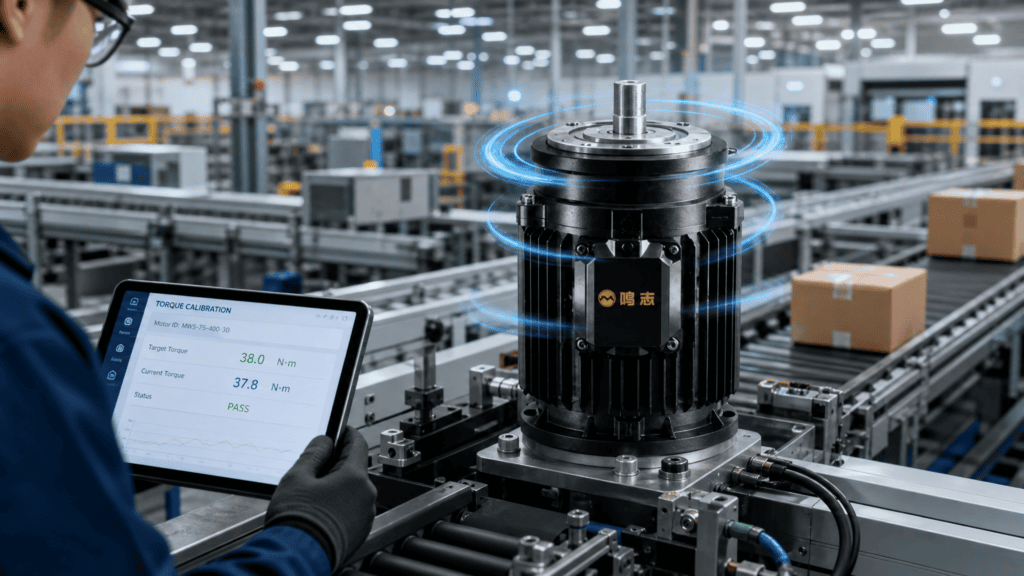
Logistics equipment is the largest short-term growth driver for custom industrial motors. Distribution centers are running longer hours with heavier totes, faster sorters, and tighter aisle layouts. Standard motors often run hot, draw excess current, or simply do not fit inside low-profile conveyor frames. Custom industrial motors solve these problems with high starting torque, compact frame geometry, and continuous-duty ratings.
### Critical specs for logistics equipment
– **High starting torque:** Conveyor lines need breakaway torque of **150% to 200%** of rated load.
– **Low-profile frames:** E-commerce sortation systems often require frame heights under **200 mm**.
– **IP54 to IP65 sealing:** Dust, cardboard fiber, and occasional washdowns shorten standard motor life.
– **Continuous-duty thermal class:** 24/7 operations demand Class F insulation with Class B temperature rise.
### Where hidden costs appear
Distributors often overlook that a standard motor with a bolt-on adapter plate changes shaft alignment and increases vibration. Industry audits show that misalignment-related bearing failures account for roughly **22%** of conveyor motor replacements. A properly engineered custom industrial motor with integrated mounting eliminates that rework and reduces installation labor by **20 to 35 minutes** per unit.
## 2. Construction and Off-Highway Machinery: Built for Dirt, Heat, and Shock
Construction machinery applications are pushing custom industrial motor demand beyond basic horsepower ratings. Excavator attachments, compact lifts, and off-highway hydraulic power units need motors that survive dust, moisture, vibration, and extreme temperature swings. Standard NEMA and IEC frames are not designed for that abuse. Custom-built motors with reinforced windings and sealed connectors now account for a growing share of commercial equipment specifications.
### Customization levers that reduce field failures
– **Reinforced windings:** Vibration-resistant varnish and lacing prevent wire fatigue in high-shock environments.
– **High-temperature insulation:** Class H insulation supports operation near engine bays and hydraulic reservoirs.
– **Corrosion-resistant coatings:** Epoxy and zinc-nickel finishes reduce rust on coastal and salt-exposed job sites.
– **Custom shaft and flange geometry:** Direct-drive attachment removes belt tension and alignment failures.
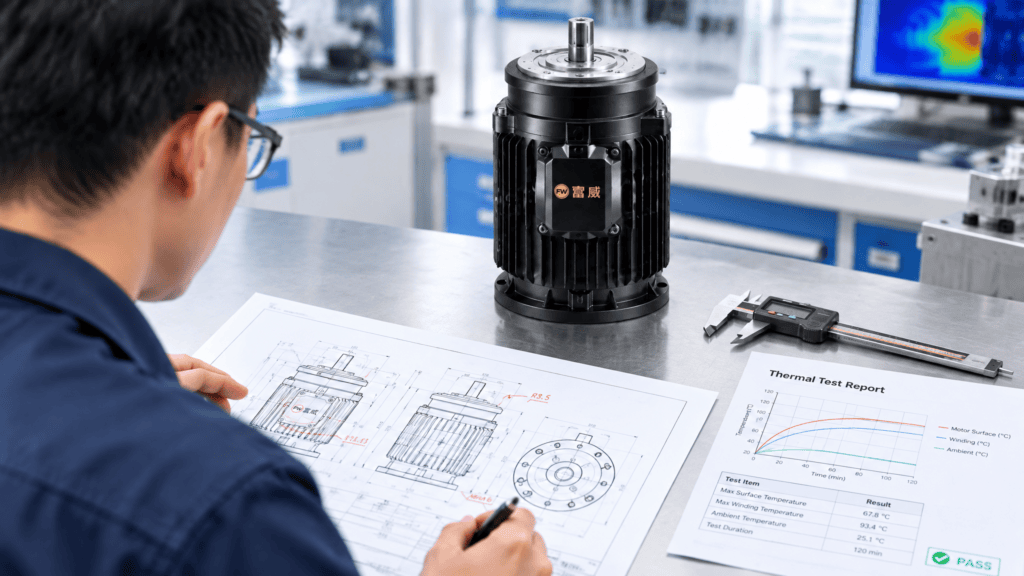
To avoid costly chargebacks, request thermal validation reports before approving a construction-grade custom motor. Reliable manufacturers typically test prototype motors at **110%** of rated ambient temperature and supply a documented duty-cycle curve.
## 3. Commercial Pumps, Fans, and HVAC: Efficiency Rules Are Rewriting Motor Specs
Commercial pump, fan, and HVAC systems are now governed by efficiency standards that standard motors often miss. Variable torque loads, part-load operation, and VFD compatibility make custom industrial motors a better total-cost choice than oversized general-purpose units. The commercial pump and fan segment is expected to see the fastest efficiency-driven replacement cycle through 2027.
### How to spec for energy compliance
– **IE4 or IE5 efficiency:** High-efficiency custom industrial motors cut energy cost by **8% to 15%** versus standard IE3 units.
– **VFD compatibility:** Inverter-duty windings handle voltage spikes and reduce harmonic heating.
– **Wide speed range:** 10:1 turndown supports demand-based ventilation and chilled-water loops.
– **Low noise profiles:** Custom fan motors with skewed rotors reduce tonal noise in occupied commercial spaces.
Industry audits show that an oversized standard motor running below **40%** load can waste **$3,800 to $9,200** per unit over five years. A custom industrial motor sized to the actual duty point eliminates that waste and improves payback for building owners.
## 4. Industrial Automation and Robotics: Precision, Compact Power, and Fast Changeover
Industrial automation is creating demand for custom industrial motors that standard servo catalogs cannot satisfy. Cobots, AGVs, packaging cells, and pick-and-place modules need compact, low-cogging, high-dynamic motors with integrated feedback. Buyers increasingly ask for 24V and 48V DC options, hollow shafts, and metric or inch hybrid mounting patterns. This is a high-margin niche for distributors that can manage technical specifications.
### Custom motor features that win automation contracts
– **Low cogging torque:** Essential for smooth motion in vision-guided and force-controlled applications.
– **Integrated feedback:** Encoders, resolvers, or Hall sensors tailored to the control architecture.
– **Compact frame sizes:** NEMA 17, NEMA 23, and metric 60 mm to 90 mm packages dominate automation builds.
– **Fast changeover shafts:** Quick-connect and clamp-style shafts reduce line changeover time.
Engineered-to-order motors in automation typically carry **15% to 25%** higher gross margin than commodity stock motors. The key is to standardize your custom motor supplier’s modular platform so you can quote quickly without redesigning every axis.
## 5. How to Evaluate Custom Industrial Motor Suppliers Without Hidden Cost Traps
Not every supplier that says custom can deliver repeatable quality. The difference between a profitable custom motor program and a margin leak shows up in MOQ language, testing reports, and traceability. Use this supplier audit to protect your commercial accounts.
### Red flags that signal future chargebacks
– **Vague MOQ language:** Watch for minimum order quantity to be confirmed clauses that change after tooling begins.
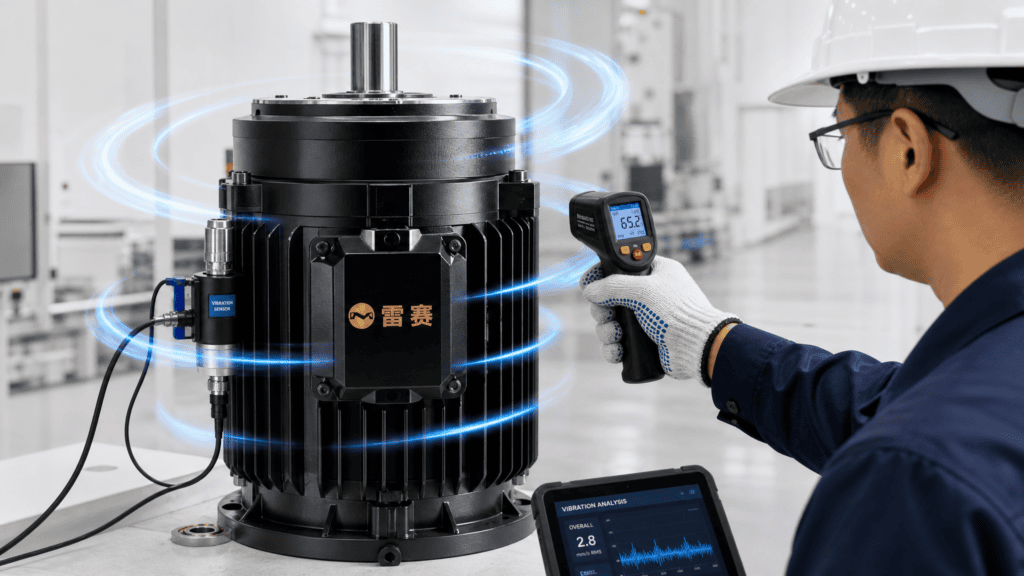
– **No thermal or IP testing reports:** A supplier that cannot document heat rise and ingress protection is guessing.
– **No serial traceability:** Field failures become impossible to isolate without batch-level traceability.
– **Unclear warranty boundaries:** Custom shafts and seals must have written warranty terms, not verbal promises.
### A supplier audit checklist
1. Request a **prototype motor report** with locked-rotor current, thermal class, and efficiency curves.
2. Confirm **IP rating test evidence** for the exact enclosure and shaft seal configuration.
3. Ask for **three reference accounts** in your target commercial sector.
4. Verify **tooling ownership** and transfer rights before signing a custom motor agreement.
5. Compare **total cost of ownership**, not just unit price: include installation, energy, and replacement labor.
Reliable manufacturers typically offer a 12- to 24-month warranty on engineered-to-order motors and provide test data before shipment. To avoid costly chargebacks, never accept a custom industrial motor without a signed specification sheet that lists tolerances, coatings, and connection details.
## Conclusion: Capture the Next Wave of Custom Industrial Motor Orders
The commercial market is moving toward application-specific motors because standard products no longer fit the performance, efficiency, and space requirements of modern equipment. First, logistics and automation demand is growing fastest, driven by 24/7 operations and compact machine footprints. Second, energy regulations are forcing pump, fan, and HVAC buyers to upgrade to IE4/IE5 custom industrial motors. Third, supplier discipline—testing reports, MOQ clarity, and traceability—determines whether you earn repeat orders or absorb chargebacks.
Use this checklist to audit your current custom motor supplier and identify which of the five sectors you can serve next quarter. Download a blank supplier scorecard, score each candidate, and commit only to manufacturers that document their custom industrial motor performance before shipment.
—
## 📚 Related Resources
– **Custom Motor Torque Calculator** — /custom-motor-torque-calculator
– **IP65 vs IP67 Motor Sealing Guide** — /ip65-vs-ip67-motor-sealing
– **MOQ Negotiation Checklist for Motor Buyers** — /motor-moq-negotiation-checklist
– **Logistics Conveyor Motor Selection Guide** — /logistics-conveyor-motor-selection
—
## ❓ Frequently Asked Questions
**Q: Which commercial industries are seeing the fastest rise in custom industrial motor demand?**
**A:** Logistics and material handling equipment, construction and off-highway machinery, commercial pumps/fans/HVAC, and industrial automation/robotics. Logistics automation is currently the strongest short-term growth driver because of 24/7 conveyor operation and compact frame requirements.
**Q: What specifications matter most for logistics conveyor custom industrial motors?**
**A:** High starting torque (150% to 200% of rated load), low-profile frame geometry, IP54 to IP65 sealing, continuous-duty thermal ratings, and integrated mounting to avoid misalignment-related bearing failures.
**Q: How do custom industrial motors reduce total cost of ownership?**
**A:** They cut unplanned downtime by 18% to 31%, reduce energy cost by 8% to 15% in IE4/IE5 applications, and eliminate rework from adapter plates and misalignment. Higher upfront cost is usually recovered through lower installation and replacement labor.
**Q: What red flags should buyers watch for in custom motor suppliers?**
**A:** Vague MOQ language, missing thermal or IP testing reports, no serial traceability, unclear warranty boundaries, and tooling clauses that change after sampling.
**Q: What is a realistic lead time for engineered-to-order motors?**
**A:** Modular custom industrial motors typically ship in 4 to 8 weeks after specification approval. Fully bespoke designs with new lamination or tooling can take 12 to 20 weeks, so confirm tooling status before committing.