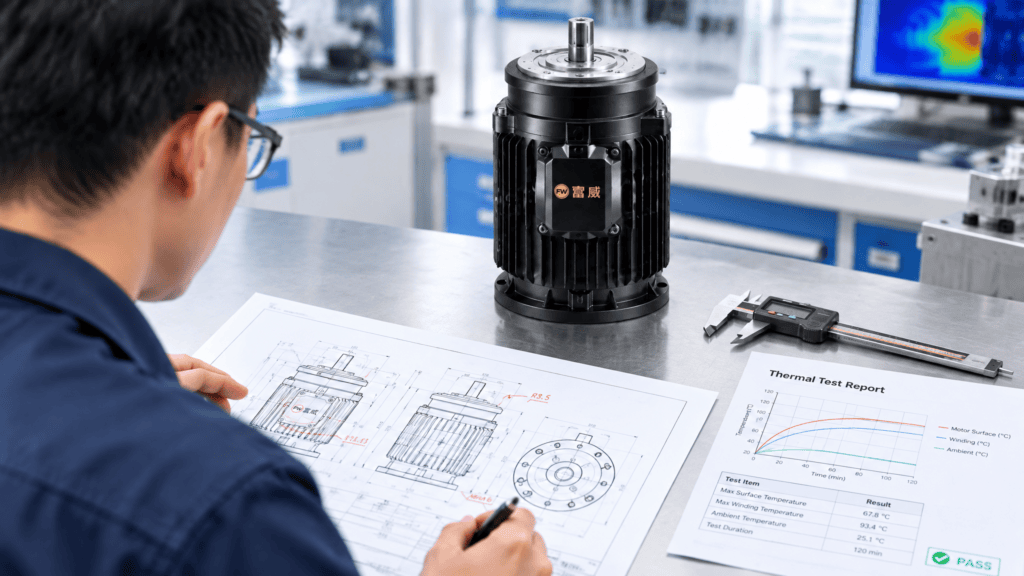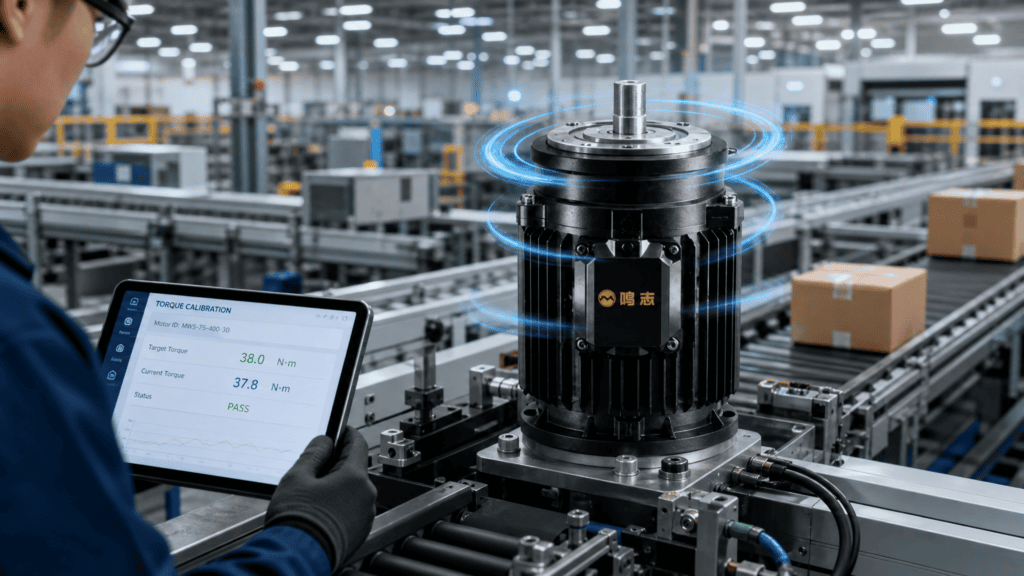
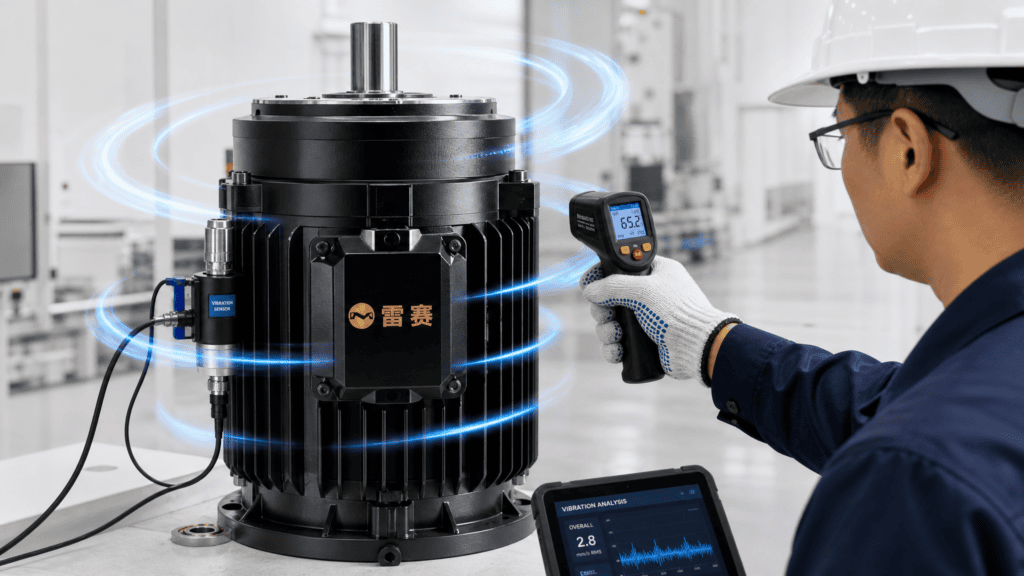
Most commercial motors do not die of old age—they are killed by preventable stress. Industry audits show that **4 out of 10** commercial motor failures trace back to heat, misalignment, or lubrication issues, cutting **commercial motor lifespan** by up to **40%**. The good news: a focused maintenance routine and the right build quality can reverse that trend. This guide breaks down the factors that shorten **commercial motor lifespan** and gives you actionable steps to extend equipment life.
## What Really Determines Commercial Motor Lifespan?
Commercial motor lifespan is not a single number. It is the result of three interacting variables: mechanical load, operating environment, and component quality. A motor rated for 20,000 hours can fail in 6,000 hours under high vibration. Reliable manufacturers typically validate motors under continuous-duty cycles, not ideal lab conditions. Understanding these variables is the first step to protecting commercial motor lifespan.
– **Load profile:** Frequent starts, stops, and overloads accelerate winding and bearing fatigue.
– **Environment:** Dust, moisture, and chemical exposure degrade insulation and lubrication.
– **Build quality:** Wear-resistant bearings and solid workmanship determine how much stress a motor can absorb before failure.
## 7 Hidden Factors That Cut Commercial Motor Lifespan by 40%
Industry audits show that most lifespan losses are traceable and reversible. Here are the seven factors that quietly destroy **commercial motor lifespan**—and how each one hits your bottom line.
### 1. Chronic Overheating
Every **10°C (18°F)** rise above rated insulation temperature can cut winding life by half. Poor ventilation, blocked fins, or high ambient heat accelerate insulation breakdown. Check surface temperature weekly with an infrared thermometer.
### 2. Misalignment and Imbalance
Even **0.5 mm** of shaft misalignment can increase bearing load by **30–50%**. Use laser alignment tools at installation and after any coupling change. Vibration above **4.5 mm/s** usually signals a problem.
### 3. Contamination and Moisture
Dust blocks cooling, while moisture corrodes bearings and reduces insulation resistance. Ingress Protection ratings matter. For washdown or dusty environments, specify **IP55 or higher** and install breather drains.
### 4. Poor Lubrication Practices
Over-greasing is as harmful as under-greasing. Excess grease churns, overheats, and forces contaminants into bearings. Follow the manufacturer’s relubrication interval and use compatible grease types.
### 5. Voltage Imbalance and Harmonic Distortion
A **2% voltage imbalance** can raise motor temperature by **10%**. Harmonics from variable frequency drives create additional heating. Monitor voltage at the motor terminals, not at the panel.
### 6. Frequent Start-Stop Cycling
Every start creates inrush current up to **6–8 times** full load. That thermal shock expands and contracts windings. Reduce unnecessary cycling with soft starters or VFDs where the process allows.
### 7. Ignoring Early Warning Signs
Noise, heat, and vibration changes are failure warnings, not annoyances. Industry audits show that plants with condition monitoring extend **commercial motor lifespan** by **20–35%**. Trend the data; do not wait for breakdown. Fix these seven issues and you will see a measurable gain in commercial motor lifespan.
## Commercial Motor Lifespan Benchmarks by Application
What should you expect? General-purpose commercial motors can run **20,000–40,000 hours** with proper maintenance. Severe-duty motors with wear-resistant bearings and solid workmanship often exceed **60,000 hours** in clean, balanced applications. These ranges are planning tools for commercial motor lifespan, not guarantees.
– **HVAC fans and pumps:** 15,000–30,000 hours
– **Conveyors and mixers:** 10,000–25,000 hours
– **Compressors and hydraulic units:** 20,000–40,000 hours
– **Washdown and high-moisture areas:** 8,000–20,000 hours unless sealed and coated
A motor that falls far below its application benchmark is telling you something about load, environment, or maintenance. Use the gap to target your next inspection.
## How to Extend Equipment Life: A 6-Step Maintenance Routine
These procedures are the highest-ROI actions to protect **commercial motor lifespan**. They work best when assigned to a named owner and tracked on a weekly/monthly schedule. When these steps become habit, commercial motor lifespan stops being a guessing game.
### Step 1: Baseline Your Motor Data
Record voltage, current, temperature, and vibration at installation. That baseline is your reference for every future reading. A **10% change** from baseline deserves investigation.
### Step 2: Inspect and Clean Cooling Paths
Turn off and lock out power. Remove dust from fins, fan covers, and air intakes. Blocked cooling can raise winding temperature by **15°C**.
### Step 3: Lubricate on a Calendar, Not a Guess
Use the manufacturer’s relubrication schedule. Mark grease type and quantity on the motor. Reliable manufacturers typically provide a lubrication plate with grams and interval.
### Step 4: Check Alignment and Fasteners
Verify coupling alignment every 6 months. Re-torque mounting bolts to specification. Loose feet create soft-foot distortion that shortens bearing life.
### Step 5: Test Insulation and Electrical Balance
Use a megohmmeter to trend insulation resistance. Measure voltage balance across phases. If imbalance exceeds **1%**, correct the supply or derate the motor.
### Step 6: Replace Worn Components Before Failure
Wear-resistant bearings are a running-cost decision, not a purchase-cost decision. Upgrading to C3 clearance or ceramic-hybrid bearings in contaminated environments can reduce maintenance frequency and extend **commercial motor lifespan**.
## Buying for Longevity: Specs That Reduce Maintenance Frequency
The cheapest motor is rarely the cheapest to own. Total Cost of Ownership (TCO) models show that **70–80%** of a commercial motor’s lifetime cost is energy, while maintenance and downtime add another **10–15%**. Spending **15–20% more** upfront on a motor with solid workmanship can lower TCO by **25%** over 10 years. For buyers, the fastest way to extend commercial motor lifespan is to purchase motors with documented durability data.
### What to Look for in a Long-Life Commercial Motor
– **Wear-resistant bearings:** Look for premium steel, C3 internal clearance, and high-temperature grease. These cut friction and survive contaminated environments longer.
– **Solid workmanship:** Check frame rigidity, precision-machined end bells, and consistent paint/coating coverage. Reliable manufacturers typically publish vibration and noise test results.
– **Inverter-duty insulation:** If the motor runs on a VFD, specify spike-resistant magnet wire and phase paper.
– **Sealed or shielded options:** In dusty plants, sealed bearings reduce relubrication needs and protect **commercial motor lifespan**.
– **Serviceability:** Grease fittings, drain plugs, and easily removable fan covers make routine maintenance faster and more likely to happen.
## The Real Cost of Ignoring Commercial Motor Lifespan
Downtime is not just a repair bill. For a production line, one hour of unplanned stoppage can cost **$5,000 to $50,000** depending on throughput. A motor that fails 6 months early turns a predictable maintenance event into an emergency purchase.
To avoid costly chargebacks from late orders, many plants keep a critical spare on the shelf. That strategy protects revenue but ties up capital. Extending **commercial motor lifespan** through maintenance is cheaper than carrying spare inventory. That is why commercial motor lifespan is a financial metric, not just an engineering one.
## Conclusion: 3 Takeaways to Extend Commercial Motor Lifespan
Commercial motor lifespan is not fixed—it is managed. The difference between a 6,000-hour motor and a 40,000-hour motor is often a handful of weekly checks. Here are the three actions that matter most:
– **Audit your operating conditions:** Heat, alignment, voltage balance, and contamination drive most failures.
– **Build a calendar-based maintenance routine:** Baseline, cool, lubricate, align, test, and replace proactively.
– **Buy for TCO, not price:** Wear-resistant bearings, solid workmanship, and inverter-duty insulation reduce maintenance frequency and protect **commercial motor lifespan**.
**CTA:** Use this checklist to audit your current motors and flag any unit running hot, vibrating above **4.5 mm/s**, or overdue for lubrication. If your supplier cannot provide bearing type, insulation class, or vibration test data, it is time to source a motor built for longevity. Every hour you add to commercial motor lifespan reduces your cost per operating hour.
—
## 📚 Related Resources
– Commercial motor maintenance checklist -> /commercial-motor-maintenance-checklist
– Wear-resistant bearing upgrade guide -> /wear-resistant-bearing-upgrade-guide
– Commercial motor failure analysis -> /commercial-motor-failure-analysis
– Industrial motor TCO calculator -> /industrial-motor-tco-calculator
—
## ❓ Frequently Asked Questions
**Q:** What is the average commercial motor lifespan?
**A:** General-purpose commercial motors typically last 20,000–40,000 hours with proper maintenance. Severe-duty units with wear-resistant bearings and solid workmanship can exceed 60,000 hours in clean, balanced applications.
**Q:** What are the biggest factors that shorten commercial motor lifespan?
**A:** The top factors are overheating, misalignment, contamination, poor lubrication, voltage imbalance, frequent start-stop cycling, and ignoring early warning signs. Most of these are preventable with a weekly inspection routine.
**Q:** How can I extend equipment life without replacing the motor?
**A:** Baseline voltage, temperature, and vibration data. Clean cooling paths, lubricate on a schedule, check alignment every six months, test insulation resistance, and correct voltage imbalance above 1%.
**Q:** Are wear-resistant bearings worth the extra cost?
**A:** Yes. Wear-resistant bearings reduce friction, tolerate contamination, and lower maintenance frequency. In TCO terms, the upfront premium is usually recovered through fewer replacements and less downtime.
**Q:** How do I know if my supplier is selling a long-life commercial motor?
**A:** Ask for bearing type and clearance, insulation class, vibration test data, and published service life under continuous duty. Reliable manufacturers typically provide this data without hesitation.