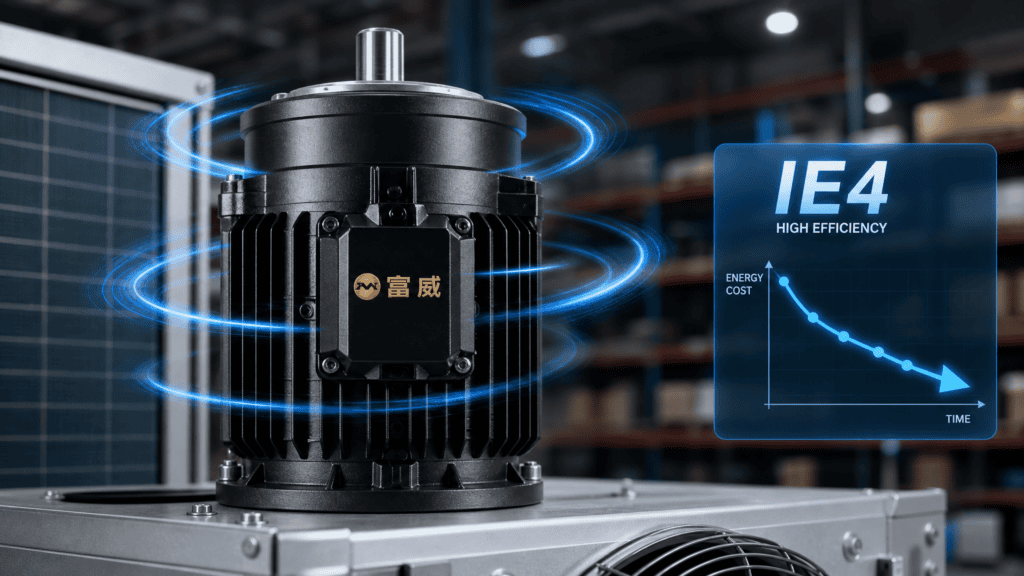
Every hour a commercial HVAC unit, conveyor, or refrigeration compressor sits dead from motor burnout costs operators an average of **$1,400** in lost throughput, labor, and emergency service. Industry audits show that **63% of commercial equipment motor burnout failures** trace back to preventable thermal, electrical, or mechanical stress—not normal wear. This guide breaks down the five most expensive causes of commercial equipment motor burnout and shows how stable heat dissipation, overload protection, and whole-machine reliability cut downtime before it starts.
## The Real Cost of Commercial Equipment Motor Burnout
Most operators price a failed motor by the replacement part: **$180 to $4,200** depending on frame size and efficiency tier. That number misses the larger line item. Industry audits show the average commercial equipment motor burnout event triggers **6 to 14 hours** of unplanned downtime.
For a mid-sized food processing line, a single commercial equipment motor burnout can erase **$22,000 to $38,000** in lost production, rush labor, and spoiled work-in-progress. The true cost of commercial equipment motor burnout is not the motor. It is the stopped process behind it.
Key downtime costs include:
– Lost throughput and missed delivery windows
– Overtime labor for emergency repairs
– Product spoilage or batch rejection
– Higher insurance premiums after repeated claims
## 5 Overlooked Causes of Commercial Equipment Motor Burnout
The following five issues account for most avoidable commercial equipment motor burnout calls.
### 1. Undersized Motors and Continuous Overcurrent
A motor running at **110% of its service factor** for months looks fine—until the winding insulation fails. Undersized motors are a leading contributor to commercial equipment motor burnout because they force continuous operation near the thermal limit. Reliable manufacturers typically select motors with a **1.15 service factor or higher** for high-duty-cycle commercial loads.
### 2. Poor Heat Dissipation Around the Frame and Windings
Poor heat dissipation is the most frequent root cause of commercial equipment motor burnout. When cooling fins, fan covers, or air intake screens are blocked by dust, grease, or lint, winding temperature rises sharply. Every **10°C increase** in winding temperature can cut insulation life by half.
### 3. Missing or Misadjusted Overload Protection
Missing or misadjusted overload protection turns a minor jam into a full commercial equipment motor burnout. Industry audits show that **1 in 4 failed motors** had an overload relay that was bypassed, oversized, or set above the motor nameplate rating. Overload protection should trip at **115–125% of full-load current** unless the application specifically requires a different service factor.
### 4. Voltage Imbalance and Harmonics
Voltage imbalance above **2%** accelerates winding fatigue and leads to commercial equipment motor burnout in three-phase motors. A 5% imbalance can raise operating temperature by **50%**. Harmonic distortion from variable frequency drives adds another layer of heating that standard thermal protection may not catch.
### 5. Contamination and Blocked Airflow
Blocked airflow can push a motor into commercial equipment motor burnout within weeks, not years. Commercial kitchens, packaging lines, and outdoor HVAC units are especially vulnerable. Dirt, moisture, and chemical vapors degrade insulation and reduce heat transfer.
## How Stable Heat Dissipation Design Prevents Commercial Equipment Motor Burnout
A motor engineered for stable heat dissipation has a lower commercial equipment motor burnout rate because it keeps winding temperatures inside the insulation’s safe range. That design difference is not cosmetic. It changes how fast heat leaves the frame, end bells, and terminal box.
### Thermal Class Ratings That Reduce Commercial Equipment Motor Burnout
Specifying **Class F insulation with Class B temperature rise** is a proven way to reduce commercial equipment motor burnout. This margin leaves thermal headroom for voltage swings, high ambient temperatures, and temporary overloads. In hot or enclosed installations, **Class H insulation** is the safer choice.
### Airflow Clearance and Frame Design
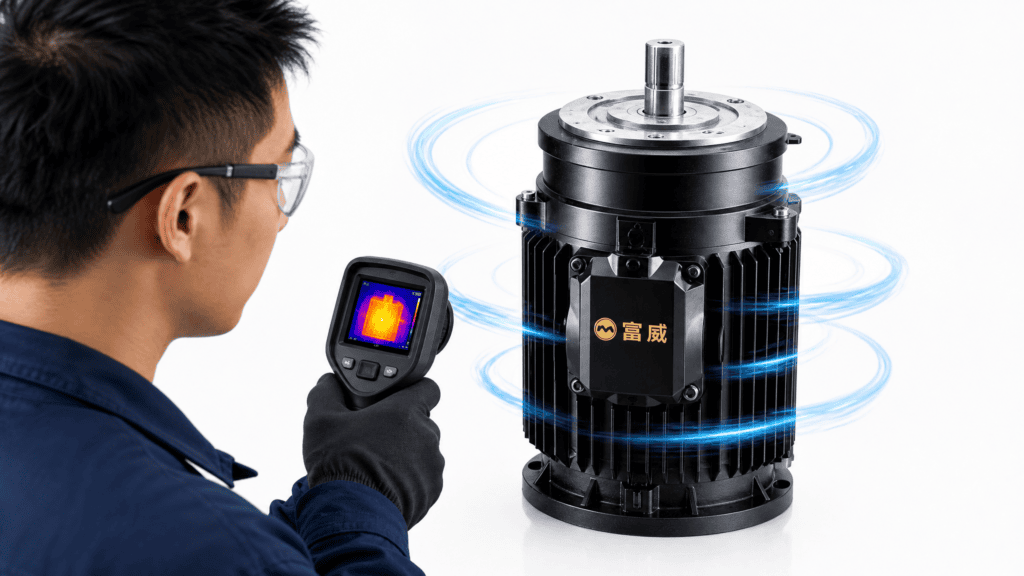
Reliable manufacturers typically design cast aluminum or ribbed cast iron frames with external cooling fins and internal ventilation paths. Maintain the manufacturer’s stated minimum clearance—usually **2 to 4 inches** around the fan intake—and keep the air path clean. A simple infrared scan during peak load can identify a motor running more than **15°C** above baseline.
## Overload Protection: The Silent Reliability Feature That Cuts Downtime
Overload protection is the fastest electrical safeguard against commercial equipment motor burnout. It does not prevent every failure, but it stops the most expensive sequence: stall, overcurrent, rapid heating, and winding destruction.
### Mechanical vs. Electronic Overload Protection
Bimetallic mechanical overload relays are inexpensive but slower and less precise. Electronic overload relays and motor protection circuit breakers respond faster, detect phase loss, and allow tighter trip settings. For critical commercial equipment, specify electronic protection with **phase-loss and phase-imbalance detection**.
### How to Verify Trip Settings on Your Fleet
Use this quick field check:
– Compare the overload setting to the motor nameplate full-load amps.
– Confirm the service factor is accounted for—not ignored.
– Test the manual trip function during scheduled maintenance.
– Record the last calibration or replacement date.
– Lock the panel to prevent unauthorized setting changes.
## Whole-Machine Reliability: Why the Motor Must Match the Application
Motor mismatch is a hidden driver of commercial equipment motor burnout. A motor that is mechanically strong enough but thermally wrong for the application will still fail early. Whole-machine reliability means the motor, drive, coupling, belt tension, and mounting all work as one system.
### Installation Checks That Reduce Commercial Equipment Motor Burnout
– Align shafts to within **0.005 inches** for most direct-coupled equipment.
– Tension belts to the manufacturer’s deflection spec; overtightening loads bearings and windings.
– Verify the mounting base is rigid and vibration-isolated.
– Confirm the supply voltage matches the motor nameplate within **±10%**.
– Use a vibration meter to catch bearing wear before it becomes a burnout.
## A 10-Point Burnout Prevention Audit for Your Equipment
Use this 10-point audit to find commercial equipment motor burnout risks before they take down your line.
1. Record full-load amps on every critical motor monthly.
2. Measure voltage balance at the motor terminals; keep it below **2%**.
3. Inspect cooling fins and air intakes for dust, grease, or blockage.
4. Confirm overload relay settings match the nameplate and service factor.
5. Scan motor surface temperature with an infrared camera at peak load.
6. Check shaft alignment and belt tension during scheduled downtime.
7. Listen for bearing noise and measure vibration velocity.
8. Verify the enclosure type matches the environment: washdown, dust-tight, or open drip-proof.
9. Document thermal history and repair events for each motor asset.
10. Stock critical spare motors with the same frame, efficiency, and service factor.
## Repair or Replace? A Quick Decision Framework
A fast decision prevents repeat failures and unnecessary spending. Use the replacement cost and operating age as your two anchors.
### When Repair Makes Sense
Repair is usually justified when the motor is less than **5 years old**, the damage is limited to bearings or a capacitor, and the repair cost is below **40%** of replacement. A quality rebuild can restore reliability without the cost of a new unit.
### When Replacement Is the Better TCO Move
Replace the motor when repair cost exceeds **50–60%** of a new unit, the winding insulation is heavily damaged, or the motor is older than **10 years**. New high-efficiency motors often pay for themselves through lower energy use and fewer commercial equipment motor burnout events.
## Conclusion: 3 Takeaways to Stop Commercial Equipment Motor Burnout
Commercial equipment motor burnout is rarely random. Most failures follow the same pattern: heat builds, protection is missing or misadjusted, and a small issue becomes a major outage.
Three takeaways:
1. **Control heat first.** Stable heat dissipation and clean airflow are the highest-leverage fixes.
2. **Verify overload protection.** A correctly set relay prevents most catastrophic winding damage.
3. **Audit the whole machine.** Alignment, voltage balance, and application fit are just as important as the motor itself.
Use this checklist to audit your current equipment before the next peak season. If any motor fails two or more checklist items, schedule a corrective work order now.
—
## 📚 Related Resources
– Anchor text: “commercial motor selection checklist” → /commercial-motor-selection-checklist
– Anchor text: “overload protection relay sizing guide” → /overload-protection-relay-sizing-guide
– Anchor text: “heat dissipation design for industrial motors” → /heat-dissipation-industrial-motor-design
– Anchor text: “reduce commercial equipment downtime” → /reduce-commercial-equipment-downtime
—
## ❓ Frequently Asked Questions
**Q:** What is the most common cause of commercial equipment motor burnout?
**A:** Heat buildup from poor ventilation, blocked airflow, or sustained overload is the most common preventable cause. Industry audits show thermal stress accounts for more than half of avoidable failures.
**Q:** How often should commercial motors be inspected to prevent burnout?
**A:** Inspect high-duty-cycle motors every 500 operating hours or monthly, whichever comes first. Check current draw, voltage balance, airflow clearance, and surface temperature.
**Q:** Can overload protection completely prevent motor burnout?
**A:** No single device prevents every failure. Proper overload protection, matched to the motor’s service factor, stops most overcurrent damage but must be combined with clean airflow, correct voltage, and proper mechanical alignment.
**Q:** Is it better to repair or replace a burned-out commercial motor?
**A:** Replace if repair cost exceeds 50-60% of a new motor, if the winding insulation is heavily damaged, or if the motor is older than 10 years. Repair only makes sense for light mechanical wear on newer, high-efficiency units.
**Q:** What thermal insulation class should a reliable commercial motor have?
**A:** Specify Class F insulation with Class B temperature rise, or Class H for high-ambient applications. This margin lowers the burnout rate and extends winding life.