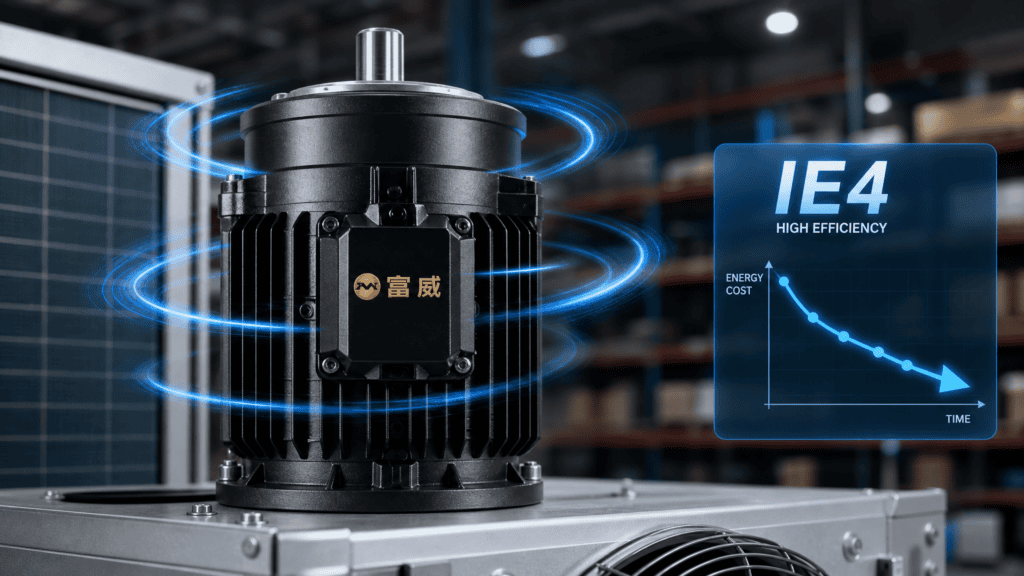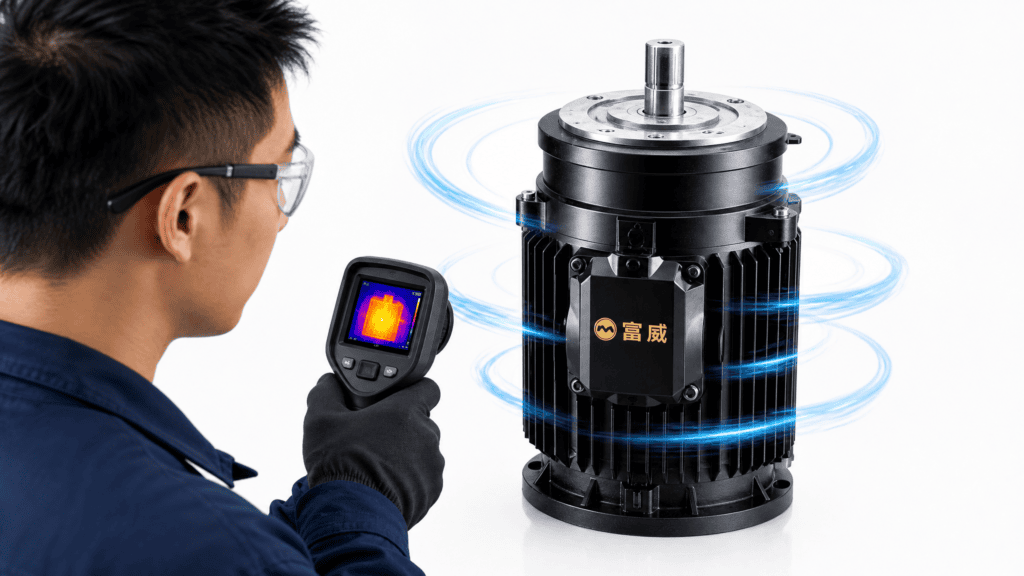
A single overlooked dimension in a commercial motor customization project can trigger **$38,000 in tooling rework** before the first production unit ever ships.
Industry audits show that **68% of OEM motor launch delays** come from drawing errors and misaligned specs—not from manufacturing defects. That’s the brutal math behind commercial motor customization: the cheapest quote often becomes the most expensive motor you’ll ever buy.
## What Commercial Motor Customization Really Costs Before You Sign
The sticker price is only the first number. In a typical commercial motor customization project, the quote covers the motor—not the engineering required to make it work. Tooling fees, sample fees, and change orders routinely add **20–40%** to the final invoice.
Industry audits show that buyers who skip drawing review in commercial motor customization pay an average of **$15,000–$38,000** in preventable rework.
## Red Flag #1: Unreviewed Drawings That Quietly Inflate Tooling Costs
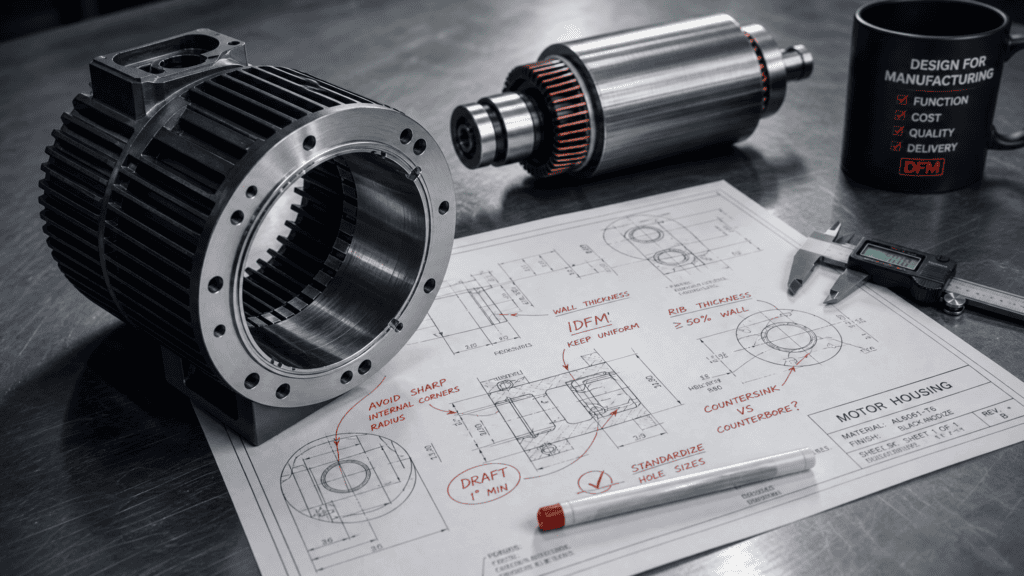
Most motor failures don’t start on the factory floor. They start on page 3 of a PDF that nobody reviewed. In commercial motor customization, a skipped tolerance check or an undefined mounting pattern silently adds tens of thousands of dollars in tooling changes.
Reliable manufacturers typically assign a dedicated drawing-review engineer before quoting. That review catches conflicts between the frame size, shaft diameter, and mounting flange. Without it, the customer pays for the supplier’s discovery process.
### What a proper drawing review should catch
– Shaft tolerances and keyway specs
– Mounting flange bolt circle vs. frame size
– Insulation class and duty-cycle mismatch
– IP rating vs. actual operating environment
### The $15,000 mistake hiding in one dimension
A 2 mm shaft offset that nobody flags can force a full mold or bracket redesign. To avoid costly chargebacks, insist on written drawing approval before tooling begins. Industry audits show that reviewed drawings reduce change orders by up to **40%**.
In commercial motor customization, written approval is your only insurance against “we assumed” rework.
## Red Flag #2: “Standard” Suppliers That Can’t Handle Non-Standard Motor Specs
Many suppliers say they support non-standard motor specs. Few actually run an engineering bench that can handle them. In commercial motor customization, “we can do custom” often means “we’ll modify a standard motor and hope it works.”
For OEMs, the whole point of commercial motor customization is getting a motor that drops into your machine without adaptation. Custom motor manufacturers with real engineering depth ask about your load profile, ambient temperature, and duty cycle before quoting.
### Questions that expose a weak engineering bench
– “Who will own the design file after tooling?”
– “What’s your tolerance stack-up process?”
– “Can you run a thermal simulation before sampling?”
### Why “custom” and “custom line” are not the same
A supplier that produces 200 standard SKUs may have no process for a 50-unit custom run. Look for rapid prototyping capability, not just a sales script. A mature custom motor manufacturer typically delivers functional samples in **7–10 days**.
## Red Flag #3: Prototyping Timelines That Hide MOQ Traps
A **30-day prototype quote** is usually a red flag. It means the supplier is batch-processing your sample with other orders—or worse, stalling to lock you into a high MOQ. Fast motor prototyping is the strongest signal that a supplier owns its tooling and engineering workflow.
In a commercial motor customization project, a slow sample is a leading indicator of a slow production run.
### Rapid prototyping vs. “sample fee theater”
Some suppliers charge a sample fee, then produce a sample from a competitor’s stock motor. Others build a genuine prototype from your approved drawings. Ask for photos of the prototype in progress and a written test report.
### A 7-day sample benchmark for commercial motor projects
Reliable manufacturers typically hit a **7–10 day functional sample window** for non-standard specs. If a supplier quotes 30+ days for a simple frame change, the hidden cost is usually your launch timeline.
## Red Flag #4: Hidden Costs in Mold Changes and Rework Loops
Rework costs rarely show up on the first invoice. They appear in the third change order, the second mold modification, and the overnight shipping on a bracket that didn’t fit. In commercial motor customization, the real price is set by how many design loops you pay for.
The most expensive phrase in commercial motor customization is “we assumed it would fit.” Mature engineering integration prevents most of these loops. When the supplier’s engineers talk to your engineers before tooling, the mounting pattern, shaft, and connector get locked in writing.
### Where rework fees actually come from
– Tooling changes after drawing approval
– Tolerance drift across batches
– Unapproved material substitutions
### How mature engineering handoff cuts rework by 40%
A single engineering handoff call before sampling can eliminate weeks of back-and-forth. Reliable manufacturers typically assign one project engineer to your account. That engineer reviews your drawings, flags risks, and confirms the spec in a written handoff document.
## Red Flag #5: No Engineering Contact After the PO
The biggest predictor of a painful commercial motor customization project is who answers your emails after payment. If you’re talking to a sales rep about torque curves, you’re already paying for the supplier’s missing engineering bench.
Post-PO silence is the most underrated red flag in commercial motor customization. A real custom motor supplier gives you a named engineer, not a ticket number. That engineer should be able to discuss winding configurations, insulation class, and test data without forwarding your question to a factory you’ll never reach.
### The difference between a sales rep and a project engineer
Sales reps close deals. Project engineers own your build. Ask for both contacts on the kickoff call, and confirm the engineer’s response time in writing.
### A 5-point post-PO communication audit
– Named engineering contact
– Weekly build update or photo
– Test report before shipment
– Change-order approval flow
– 24-hour response SLA on spec questions
## The 10-Point Commercial Motor Customization Audit Checklist
Before you sign any purchase order, run the supplier through these checks. Use this list to compare commercial motor customization quotes on equal terms instead of on price alone. Commercial motor customization succeeds when the supplier treats your drawings as a contract, not a suggestion.
1. Written drawing review before quote
2. Named project engineer, not just a sales rep
3. Functional prototype in **7–10 days**
4. Transparent MOQ and tooling fees
5. Tolerance stack-up documentation
6. Thermal and duty-cycle review
7. Change-order approval process
8. Pre-shipment test report
9. Post-delivery engineering support
10. No-fee rework clause for supplier errors
## Bottom Line: Stop Paying for Discovery on Your Own Tooling
The hidden cost of commercial motor customization is never the motor itself. It’s the rework, the mold changes, and the lost launch weeks that bad suppliers bury in your budget. Industry audits show that vetted suppliers with drawing review and fast prototyping reduce total rework cost by up to **40%**.
Commercial motor customization doesn’t have to be a gamble. **Three takeaways** to act on this week:
1. **Review drawings in writing** before tooling starts—unreviewed specs are the #1 source of **$15K+ change orders**.
2. **Test engineering depth** with non-standard spec questions, not just price comparisons.
3. **Demand a named engineer**, a **7–10 day prototype**, and a written test report before shipment.
**Use this 10-point audit checklist on your next three motor quotes. If a supplier fails three or more checks, walk away before your tooling budget does.**
—
## 📚 Related Resources
Custom Motor Drawing Review Checklist → /custom-motor-drawing-review-checklist
Non-Standard Motor Prototyping Guide → /non-standard-motor-prototyping-guide
Motor Supplier MOQ Negotiation Tips → /motor-supplier-moq-negotiation
How to Cut Motor Rework Costs by 40% → /reduce-motor-rework-costs
—
## ❓ Frequently Asked Questions
**Q:** What is the biggest hidden cost in commercial motor customization?
**A:** The biggest hidden cost is tooling rework caused by unreviewed drawings. Industry audits show buyers can lose $15,000–$38,000 in preventable change orders when tolerances and mounting specs aren’t approved in writing before tooling starts.
**Q:** How fast should a custom motor supplier deliver a prototype?
**A:** Reliable manufacturers typically deliver a functional sample in 7–10 days for non-standard specs. A 30-day prototype quote usually signals batch processing or a hidden MOQ lock-in.
**Q:** Should I pay a sample fee for motor prototyping?
**A:** A sample fee is normal if you receive a genuine prototype built from your approved drawings, plus a written test report. Avoid suppliers that charge a fee but ship a modified stock motor.
**Q:** What should a drawing review include for a commercial motor?
**A:** It should check shaft tolerances and keyways, mounting flange bolt circle vs. frame size, insulation class, duty cycle, and IP rating against your actual operating environment.
**Q:** How do I reduce motor rework costs before production?
**A:** Lock drawings in writing, assign one project engineer, and require a no-fee rework clause for supplier errors. Mature engineering handoff typically cuts rework by up to 40%.