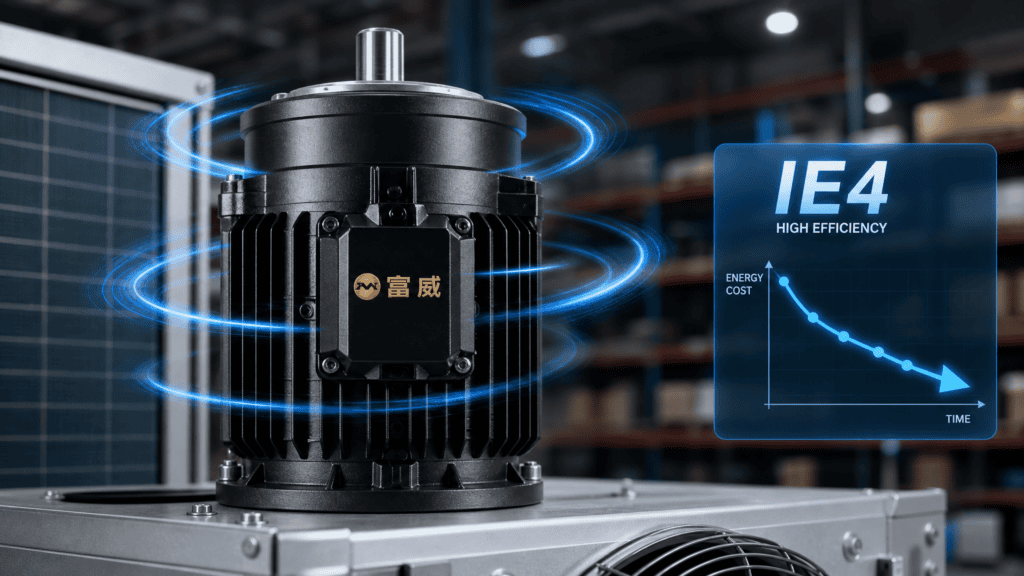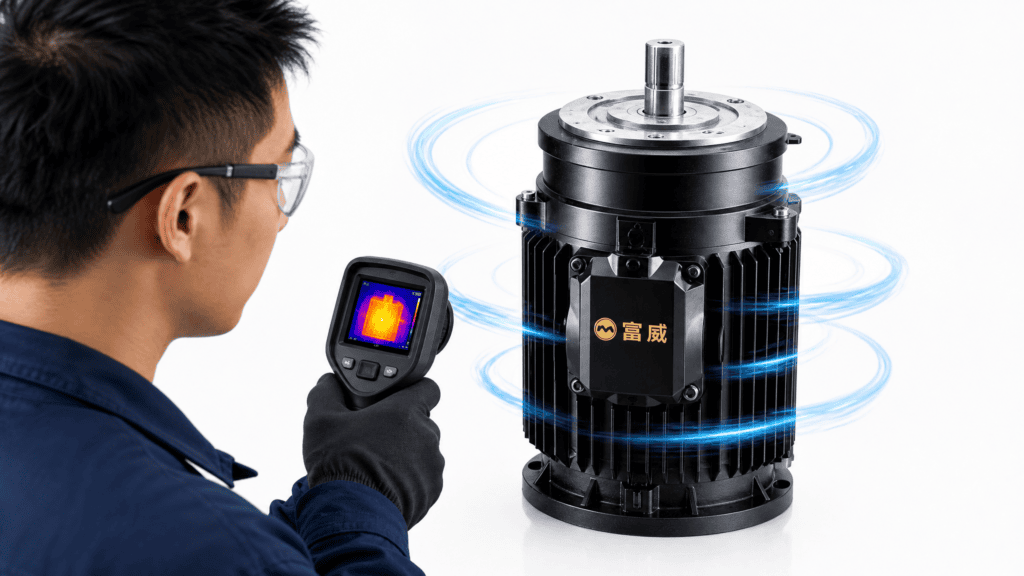
Industry audits show that roughly 30% of commercial low‑power motor failures trace back to selection and sourcing mistakes—not manufacturing defects. Buyers who chase the lowest unit price often inherit higher warranty claims, production downtime, and hidden rework costs. This commercial low‑power motor selection guide breaks down five proven red flags to avoid before you sign the PO.
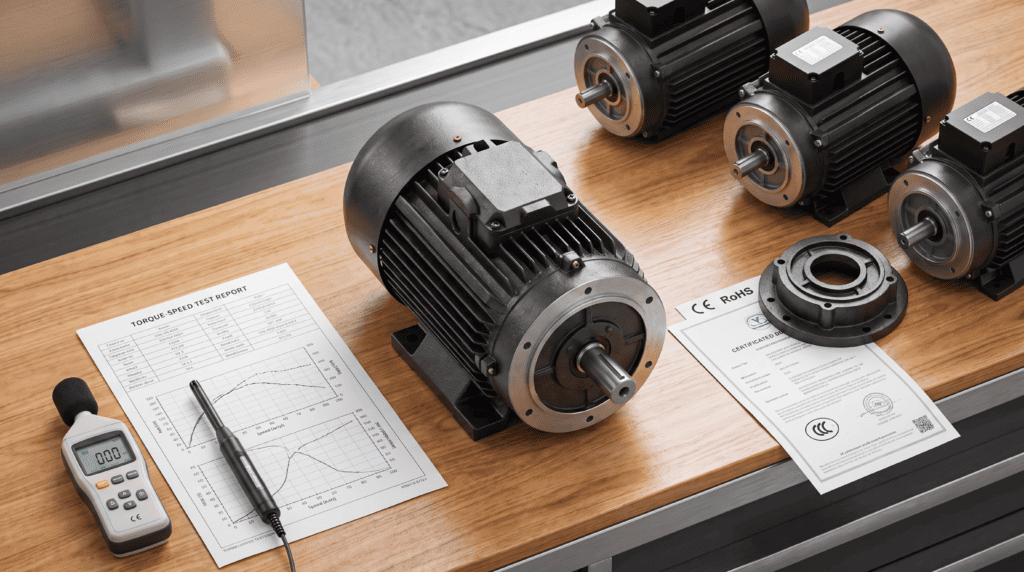
Red Flag 1: Quoting Power Without a Torque‑Speed Curve
ommercial low-power motor selection fails when buyers compare only watts or horsepower. Rated power is meaningless without the torque-speed curve at your actual operating point.
Industry audits show that a motor sized by power alone can be 20–40% oversized—or worse, stall under load.
Reliable manufacturers typically supply torque curves, efficiency maps, and locked-rotor current data as standard.
Match Torque at Operating Speed, Not Just Rated Power
Ask for the torque‑speed curve at your final drive speed.
Check locked‑rotor torque and breakdown torque, not just running torque.
Oversizing wastes energy; undersizing burns windings and trips drives.
Confirm Duty Cycle and Thermal Class
S1 continuous and S3 intermittent duty produce very different heat loads.
Class F insulation with a Class B temperature rise gives a safer thermal margin.
Ask for the temperature rise limit at your ambient temperature and enclosure.
Red Flag 2: Missing Noise, Vibration, and Temperature Rise Data
Low noise and low vibration are measurable acceptance criteria, not marketing phrases. A motor with stable temperature rise lasts longer in sealed or compact equipment.
Reliable manufacturers typically publish noise in dB (A), vibration velocity in mm/s, and temperature rise in Kelvin. Suppliers that refuse to share this data often hide bearing, rotor balance, or ventilation problems.
Define Acceptance Limits Before Sampling
Set a noise limit of roughly 45–55 dB(A) for small commercial motors, depending on size and speed.
Request vibration grade A or B according to IEC 60034‑14.
Confirm temperature rise stays within the insulation class limit at full load.
Ask for Batch Test Reports, Not Just Brochures
Request actual no‑load current, rated current, and efficiency values.
Compare locked‑rotor current against the datasheet to avoid weak start performance.
Use batch data to detect variation that individual samples can hide.
Red Flag 3: Aluminum vs Cast Iron Housing Selection Mistakes
The housing is not cosmetic. Aluminum offers lighter weight and better heat dissipation for small frames, while cast iron provides rigidity and corrosion resistance in harsh environments.
Choosing the wrong housing material leads to **misalignment, premature bearing wear, or condensation damage**.
Suppliers with a full series and multi-spec coverage should offer both aluminum and cast iron options with clear application guidance.
Match Torque at Operating Speed, Not Just Rated Power
– Aluminum suits weight-sensitive machines, clean indoor use, and frequent starts.
– Cast iron suits high humidity, mechanical stress, and areas with temperature swings.
– Confirm the housing paint or coating for washdown or outdoor exposure.
Verify Frame Dimensions and Mounting Standards
– Confirm IEC or NEMA frame compatibility before ordering.
– Specify foot, flange, or face mounting and shaft orientation.
– Ask for 2D and 3D drawings during pre-sales selection support.
Red Flag 4: Generic Certifications and Missing Drawings
CE, RoHS, and 3C marks on a website are worthless if they do not match the exact SKU you are buying. Industry audits show that certificate mismatches are among the top reasons for rejected shipments at customs.
To avoid costly chargebacks, validate certificate numbers, voltage ranges, and model series before payment.
Reliable manufacturers typically provide parameter sheets, dimensional drawings, and declarations of conformity during pre-sales selection support.
Validate Certificate Scope Against the Actual Model
– Check that the certificate lists your exact model number or series.
– Confirm the voltage, frequency, and power range on the certificate.
– Ask for the issuing lab, certificate number, and validity date.
Use Drawings to De-Risk Customization
– Request CAD or PDF drawings before the purchase order.
– Confirm shaft diameter, keyway, lead exit, and mounting dimensions.
– Lock an approved sample and drawing revision into the PO.
Red Flag 5: Hidden Costs, MOQ Traps, and Weak Pre-Sales Support
The unit price is not the total cost. Freight, customs, incoming inspection rejects, and rework can add **15–30%** to a low-power motor program.
MOQ traps force you to buy more than your demand plan and increase inventory carrying costs.
Reliable manufacturers typically offer flexible MOQs, clear Incoterms, and engineering support before payment—not just after.
Calculate Total Cost of Ownership Before Comparing Quotes
– Add unit price, freight, duty, incoming inspection, and warranty rework cost.
– Compare life-cycle energy cost at your actual duty cycle.
– Include expected defect rate and replacement lead time in the model.
Negotiate MOQ and Customization Terms Early
– Ask for a pilot or sample order before committing to full MOQ.
– Confirm pricing for custom shafts, leads, connectors, and mounting options.
– Put drawing approval, test parameters, and lead time into the purchase order.
How to Audit a Commercial Low-Power Motor Supplier in 15 Minutes
Use this checklist before you commit to a supplier. Reliable manufacturers typically answer technical questions within 24 hours and share test data without hesitation.
A supplier that cannot provide full series coverage, both housing options, and SKU-matched certificates is not ready for production-scale B2B sourcing.
Pre-PO Supplier Audit Checklist
– Torque-speed curve at your operating point
– Noise, vibration, and temperature rise test report
– CE, RoHS, and 3C certificate matching the exact SKU
– 2D and 3D drawings with shaft and keyway details
– Aluminum and cast iron housing options
– MOQ, lead time, and Incoterms in writing
– Engineering pre-sales selection support before payment
Conclusion: Stop Buying Motors on Spec Sheets Alone
First, compare motors at operating torque and thermal class—not rated power. Second, demand test data and SKU-matched certifications before payment. Third, calculate total cost of ownership and negotiate MOQ flexibility.
Use this checklist to audit your current motor supplier, or send it to a potential partner before your next purchase order.