Introduction
Motors serve as the core power source of industrial equipment. Yet many purchasers and engineers adopt a one-size-fits-all approach when selecting motors, which leads to frequent overheating, premature burnout, unstable operation and excessive energy loss.
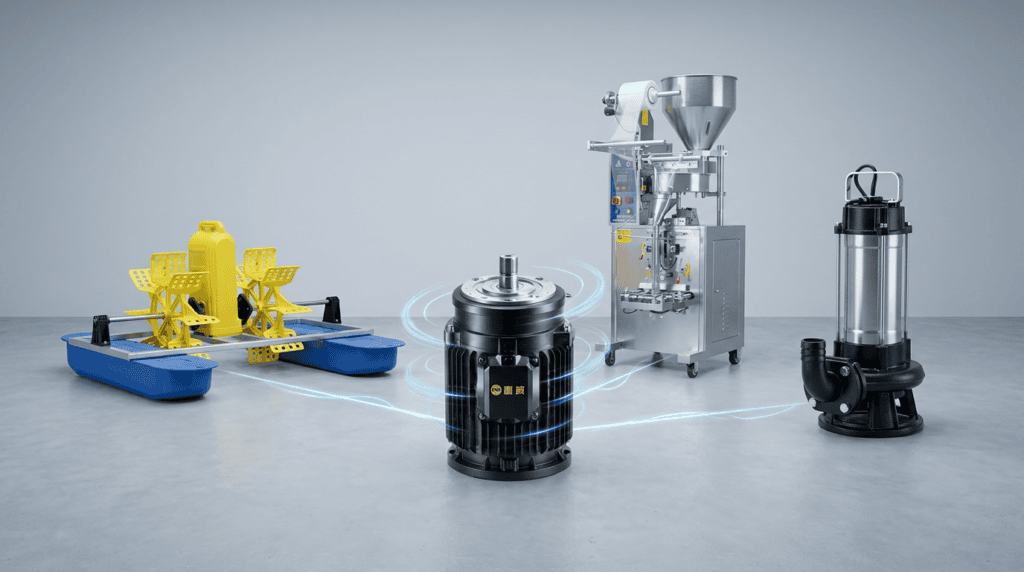
From wastewater treatment aquaculture aeration, underwater fluid transportation, to hygienic food production workshops, motors face completely different operating environments and load demands. This article sorts out a universal motor selection framework — Three Core Principles of Motor Selection, to compare three typical application scenarios: surface aerators, submersible pumps and food packaging machinery.
Whether you are sourcing motors for water treatment, agricultural aquaculture, industrial drainage or food processing lines, this guide will help you pick the most matched motor for your equipment.
Three Application Scenarios: Three Distinct Operating Environments
Every working condition creates unique challenges for motor design. Before selection, we need to clarify the pressure each application brings to the motor.
- Surface Aerator: Underwater Marathon Runner
Motors for impeller surface aerators need long-term, even 24-hour non-stop operation. It drives high-speed rotating impellers to mix air and water for oxygenation.
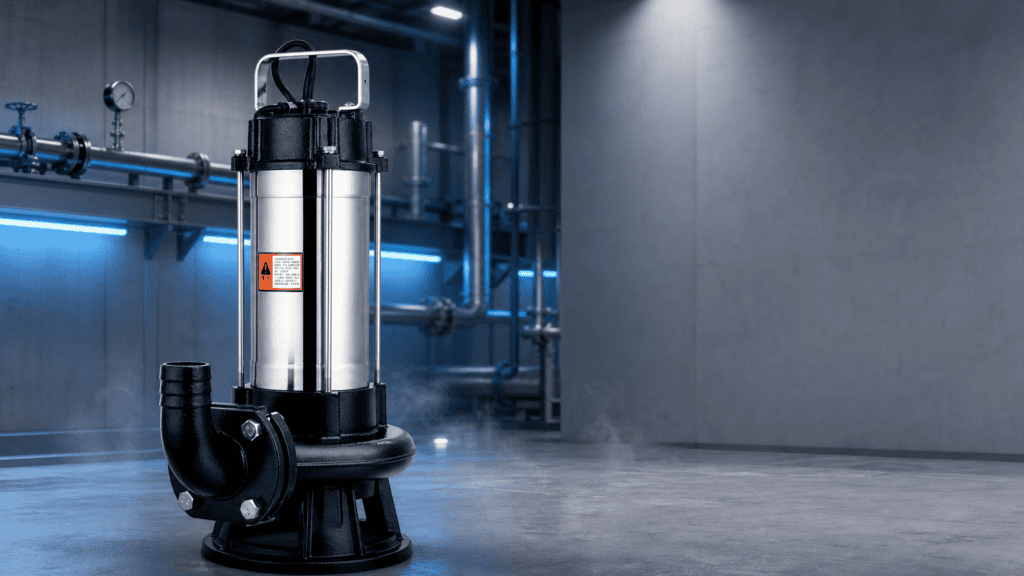
Core challenges: Continuous high-load operation, reliable waterproof performance and stable heat dissipation underwater. - Submersible Pump: Underground Power Heart
The motor runs fully immersed in liquid, acting as the prime mover for fluid delivery.
Core challenges: Complete waterproof sealing, adaptability to diverse water quality (clean water/sewage), high starting torque. - Food Packaging Machine: Precision Hand in Cleanroom
Motors drive packaging actions including filling, sealing and labeling inside hygienic workshops.
Core challenges: High precision control, frequent start-stop cycles, compliance with food-grade sanitation standards.
The Three Laws of Motor Selection: One Framework for Three Applications
This is the core of this article. Use the unified three-law framework to analyze selection priorities for different equipment, easy for engineers to compare and understand.
1st Law: Environment Determines Survivability
·Surface Aerator & Submersible Pump
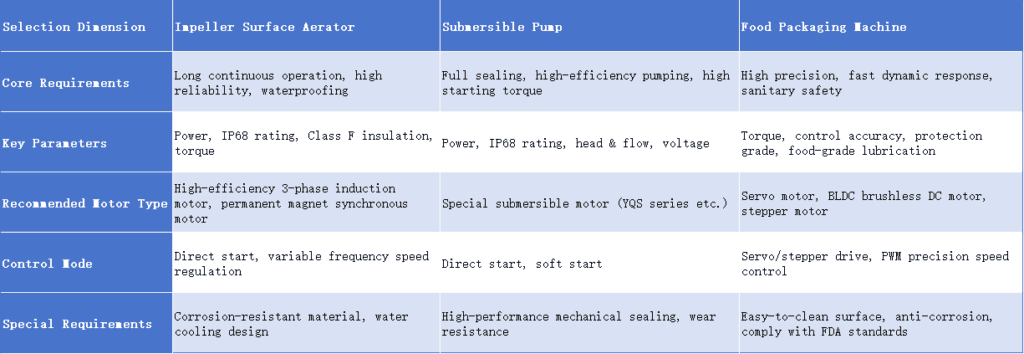
IP protection rating is the lifeline. Both types generally require IP68 rating, fully dustproof and capable of continuous underwater operation. The insulation class of motors shall be Class F or higher, coping with poor heat dissipation conditions underwater.
·Food Packaging Machine
The priority lies in hygienic design. Motor materials must be corrosion-resistant and easy to clean. Applied lubricants need to be food-grade to prevent product contamination.
2nd Law: Load Determines Power Output
·Surface Aerator & Submersible Pump
Power matching is critical. It is necessary to calculate shaft power accurately with service factor reserved. Normally, reserve 10%~15% power margin to withstand peak loads.
·Food Packaging Machine
The core target is torque & precision. Calculate torque strictly based on actual load. Select motors that support precise speed and position control, such as servo motors or BLDC brushless motors.
3rd Law: Control Determines Intelligence
·Surface Aerator & Submersible Pump
To adapt to variable working conditions, VFD variable frequency drive is widely adopted to realize soft start and energy-saving speed regulation. Motors should be equipped with comprehensive protection including overload and overheat protection.
·Food Packaging Machine
Demands ultra-high control performance. Closed-loop control is commonly deployed. PWM signal enables high-precision speed adjustment. Motors can connect to factory automation systems via communication protocols such as Modbus.
Selection Reference Table – Quick Comparison
Practical Cases: From Fault Troubleshooting to Efficiency Improvement
Case 1 Water Treatment – Aerator & Pump Equipment
A sewage treatment plant suffered frequent overheating shutdowns of surface aerator motors. Technical analysis indicated insufficient power margin and lack of variable frequency control.
After upgrading to IE3 high-efficiency motors and installing supporting inverters, energy consumption dropped by 15%, and overheating failures were completely eliminated.
Case 2 Food Processing – Packaging Line
A food manufacturer faced frequent downtime caused by wear of brushed motors on packaging machines.
After switching to BLDC brushless DC motors, the equipment achieved maintenance-free continuous operation. Control accuracy increased from ±5% to ±0.5%. The factory saved more than 120,000 CNY annually on maintenance and raw material waste.
Conclusion
There is no universal motor solution for all equipment. Motor selection cannot rely on experience alone; it must be customized according to specific application scenarios.
The Three Core Principles offered in this article provide a replicable analysis framework. Engineers and buyers can follow the logic: evaluate operating environment → confirm load demand → define control scheme, to screen the optimal motor solution for aerators, submersible pumps or food packaging machinery.
Improper motor selection brings hidden risks including unexpected shutdown, high maintenance cost and excess power consumption. Scientific matching helps you extend equipment service life, cut operational costs and achieve stable long-term production.
If you require technical support for motor parameter confirmation, customized design or quotation, contact our engineering team for professional consultation.
Final CTA
✅ Download Complete Motor Selection Checklist
✅ Get Free Technical Parameter Consultation
✅ Request Custom Motor Solution